În acest ghid
Industrial pendant lights carry the visual language of factories and warehouses into everyday homes, where exposed hardware and metal pendant lights create a grounded, unfinished aesthetic. The style emerged from actual working spaces, where function preceded decoration and durability meant heavy-gauge materials and simple construction. Today, that utilitarian backbone translates into clean, modern interiors where raw textures balance soft furnishings and warm wood tones.
The appeal lies in contrast. Industrial style lighting introduces hard surfaces and matte finishes into rooms that might otherwise feel too polished or predictable. A single pendant above a kitchen island or a trio over a dining table anchors the space with visible structure, honest materials, and straightforward geometry. The fixtures work equally well in urban lofts with exposed brick and concrete, suburban kitchens with white cabinetry, or renovated farmhouses where old beams meet new appliances.
This guide explains how to choose industrial pendant lights for different rooms, what materials and finishes make the style work, and how to balance raw edges with the comfort and warmth of a home that people actually live in. The goal is a space that feels intentional, not themed, where lighting supports everyday tasks while contributing a distinct visual texture.
What Defines Industrial Pendant Lights
Industrial fixtures share a set of recognizable characteristics rooted in their utilitarian origins. Exposed bulbs are common, often protected by wire cages or simple metal shades rather than concealed within diffusers. The construction is straightforward: metal bodies, visible hardware, minimal ornamentation. Materials include steel, iron, brass, and aluminum, typically finished in matte black, brushed nickel, oil-rubbed bronze, or aged brass.
The silhouettes tend toward basic geometric forms. Dome shades, cone pendants, cylindrical cages, and rectangular lanterns appear repeatedly because they derive from fixtures designed to cast direct light downward in work environments. Adjustable pendant lights with pulley mechanisms or articulated arms reference the adaptability needed in workshops, where task lighting had to move as the work moved.
Color rendering matters more than ambient glow. Industrial spaces required accurate color perception for quality control and precision work, so fixtures often used high-CRI bulbs. In a home context, this translates to lighting that shows materials and textures truthfully, whether that's food on a dining table, ingredients on a cutting board, or the grain in a wood countertop. Aim for CRI 90 or higher when choosing bulbs to maintain that clarity.
Scale is another defining trait. Factory pendants needed to illuminate large areas from high ceilings, so the fixtures themselves were often substantial. In residential spaces, that scale provides visual weight without occupying floor space, which makes oversized pendants effective in rooms with vaulted ceilings or open floor plans. A single large fixture can anchor a room more effectively than several smaller ones scattered across the ceiling.
Choosing Materials and Finishes
Metal dominates industrial style lighting because it was the most durable and heat-resistant material available in working environments. In home applications, that durability translates to fixtures that age well and tolerate daily use. Steel and iron provide weight and substance, while brass and copper introduce warm metallic tones that soften the harder edges of black or gunmetal finishes.
Matte black remains the most versatile finish. It contrasts sharply with white walls and light cabinetry while blending seamlessly with darker tones and wood accents. Matte black pendant lights work in modern farmhouse kitchens, Scandinavian-inspired dining rooms, and minimalist lofts because the finish is neutral enough to let other materials take visual priority. It also hides fingerprints and dust better than polished surfaces.
Brushed nickel and satin chrome offer a cooler metallic alternative. These finishes reflect more light than matte black, which can help brighten rooms with limited natural light. They pair well with stainless steel appliances and contemporary hardware, creating a cohesive material palette across a kitchen or bathroom. The slightly reflective surface also softens the industrial edge, making the fixtures feel less stark in spaces with upholstered furniture and textiles.
Brass and bronze introduce warmth. Aged brass pendant lights develop a patina over time, which enhances the lived-in quality that makes industrial style approachable rather than cold. These warmer metals work particularly well in spaces with wood cabinetry, leather upholstery, or terracotta tones. The key is to match the metal temperature to the undertones in the rest of the room: cool metals with grays and whites, warm metals with browns and creams.
Glass elements, when present, are typically clear and simple. Seeded glass or ribbed glass adds texture without ornamentation, while clear glass keeps the focus on the bulb itself. Some fixtures combine metal cages with glass shades to protect the bulb while maintaining the exposed, structural aesthetic. If your space needs softer light, look for frosted or opal glass inserts that diffuse the beam without concealing the fixture's industrial bones.
Loft Lighting Ideas for Open Spaces
Open floor plans benefit from fixtures that define zones without introducing visual clutter. Industrial pendant lights excel in this role because their clean lines and straightforward geometry create focal points that organize a space. In a loft with minimal interior walls, pendants above a kitchen island, dining table, or living area seating group act as ceiling-level markers that subtly separate one function from another.
Height matters in spaces with high ceilings. Standard 8-foot ceilings require pendants that hang no lower than 7 feet from the floor in walkways to maintain clearance. In lofts with 10- to 12-foot ceilings, you can lower fixtures more dramatically to bring light down to the functional plane. Over a dining table, aim for 30 to 36 inches above the table surface; over a kitchen island, the same range applies. These dimensions ensure the light reaches the work surface without putting the fixture at eye level when seated or standing.
Clustering multiple pendants creates rhythm. Three identical fixtures spaced evenly above a long island or dining table provide balanced illumination and a sense of intentional design. For a 6-foot island, three 10- to 12-inch diameter pendants spaced roughly 24 inches apart work well. For an 8-foot table, consider three 14- to 16-inch pendants. The spacing should feel generous, not cramped, with enough distance between fixtures that they read as a cohesive group rather than a collision.
Mix lighting types to avoid flatness. Industrial pendants provide focused downlight, which is ideal for tasks but can create harsh shadows if used alone. Supplement with wall sconces, floor lamps, or recessed lighting to layer ambient and accent light into the space. This approach mimics the way factories combined overhead task lights with perimeter lighting for safety and visibility. In a home, it means you can dim the pendants for dinner while keeping softer light sources active for circulation and atmosphere.
Consider dimmable LED bulbs rated for enclosed fixtures if your pendants have metal shades that trap heat. Dimming capability lets you adjust light levels throughout the day, shifting from bright task lighting during meal prep to lower, warmer light during dinner. Look for bulbs with TRIAC or ELV dimming compatibility to ensure smooth, flicker-free operation with standard home dimmers.
Integrating Industrial Fixtures in Residential Kitchens
Kitchens demand both adequate illumination and visual cohesion. Industrial pendant lights above an island or peninsula provide focused light where you prep, chop, and serve, while contributing a strong design statement that ties the room together. For task lighting, aim for 70 to 80 lumens per square foot across work surfaces. If your island measures 4 feet by 8 feet (32 square feet), that's roughly 2,240 to 2,560 lumens total, which three pendants with 800-lumen bulbs can easily deliver.
Match the fixture finish to your hardware. If your cabinet pulls and faucet are matte black, black pendant lights create a unified material story. If you have brushed nickel hardware, nickel or chrome pendants reinforce that choice. This consistency prevents the lighting from feeling like an afterthought. It also allows other elements, like backsplash tile or countertop stone, to introduce pattern and color without visual competition.
Balance hard and soft materials. Industrial lighting introduces metal, so balance it with wood cabinetry, fabric window treatments, or upholstered seating. A kitchen with white shaker cabinets, marble countertops, and black metal pendants feels clean and modern. Add a wood stool seat or a linen Roman shade, and the space gains warmth without losing its crisp geometry.
Our kitchen island lighting collection includes fixtures designed specifically for the scale and task demands of island installations. Each piece combines durable materials with thoughtful proportions to deliver reliable illumination and lasting style.
Industrial Style Lighting for Dining Rooms
Dining rooms present an opportunity to use lighting as the primary decorative gesture. A single oversized pendant or a linear cluster of smaller fixtures above the table creates a visual anchor that pulls the room into focus. The fixture should feel substantial without overwhelming the space. For a rectangular table, a linear arrangement of two to four pendants works well. For a round or square table, a single large pendant centered above provides symmetry and balance.
Sizing follows a simple rule: the fixture diameter should be one-half to two-thirds the width of the table. A 42-inch round table pairs well with a 20- to 28-inch pendant. A 72-inch rectangular table accommodates a linear fixture up to 36 inches long or a cluster of three 12- to 14-inch pendants. These proportions ensure the fixture feels integrated rather than incidental.
Color temperature affects mood. Warm white (2700K to 3000K) creates a relaxed, inviting atmosphere suitable for dinner and conversation. Cooler temperatures (3500K and above) feel more alert and clinical, which works in modern spaces but can make a dining room feel less intimate. Industrial fixtures often expose the bulb, so the color temperature is immediately visible. Choose bulbs with high CRI to render food colors accurately and make the table setting look appealing.
Dimming transforms a dining room from functional to atmospheric. Install a dimmer switch so you can raise light levels when setting the table or clearing dishes, then lower them during the meal. This flexibility is essential in a room used for different activities, from weeknight dinners to holiday gatherings. Dimmable LED bulbs in vintage Edison or clear globe shapes enhance the industrial aesthetic while providing the control you need.
Explore more options in our dining room chandeliers selection, where industrial silhouettes meet refined proportions designed for everyday use.
Pairing Industrial Lighting with Other Design Styles
Industrial fixtures adapt to a surprising range of interior styles because their simplicity allows other elements to define the room's character. In a modern farmhouse, matte black pendants contrast with shiplap walls and reclaimed wood beams, emphasizing the tension between old and new. The fixtures provide urban edge without erasing the rural references that give farmhouse style its identity.
In Scandinavian interiors, industrial lighting introduces material variety. Scandinavian design relies on light wood tones, white walls, and clean lines, which can sometimes feel monochromatic. A black metal pendant or a brushed nickel fixture adds visual weight and a tactile contrast that prevents the space from feeling too airy or ephemeral. The industrial piece grounds the room without compromising the Scandinavian commitment to simplicity and function.
Wabi-sabi aesthetics embrace imperfection and authenticity, which aligns naturally with industrial style's raw finishes and exposed construction. Aged brass or oxidized metal fixtures fit seamlessly into spaces where natural materials, irregular textures, and muted colors dominate. The industrial fixture becomes another layer of honest materiality, contributing to the sense that the room has been assembled thoughtfully over time rather than decorated all at once.
Minimalist spaces benefit from the structural clarity of industrial pendants. A single cone pendant above a dining table or a row of cylinder pendants in a hallway provides necessary light while maintaining the visual restraint that minimalism requires. The fixtures are present but not decorative in a fussy sense. They perform their task and occupy space without demanding attention.
See how industrial elements integrate with other approaches in our minimalist and Scandinavian collections, where clean lines meet warm, livable interiors.
Practical Installation and Maintenance Considerations
Most industrial pendant lights install using a standard E26 medium base socket, which is the same socket used in most US household fixtures. If the pendant includes an integrated LED, check the lifespan (typically 25,000 to 50,000 hours) and confirm whether the LED module is replaceable. Integrated LEDs simplify installation and eliminate the need to buy bulbs separately, but they also mean the entire fixture may need replacement when the LED eventually fails.
Adjustable-height pendants offer flexibility during installation. Many industrial fixtures use a cord or chain that you can shorten to the desired length. Measure ceiling height and table or countertop height before installation to determine the correct drop. Mark the cord or chain at the appropriate length, then secure it with the fixture's built-in adjustment mechanism. This approach lets you fine-tune the height after installation if the initial measurement feels too high or too low.
Electrical boxes must support the fixture weight. Industrial pendants made from steel or iron can be heavier than decorative glass or plastic fixtures. Confirm that your ceiling box is rated for the fixture weight, which is listed in the product specifications. If the existing box is insufficient, upgrade to a fan-rated or heavy-duty box before installation. This step prevents the fixture from pulling loose over time.
Cleaning metal finishes requires minimal effort. Matte black and brushed nickel surfaces accumulate dust and fingerprints slowly. Wipe them with a dry microfiber cloth every few weeks to maintain their appearance. Avoid abrasive cleaners or rough sponges, which can scratch the finish. For brass or bronze fixtures, some patina development is expected and often desired, but if you prefer a consistent appearance, use a soft cloth with a mild soap solution, then dry immediately to prevent water spots.
Bulb selection impacts both performance and aesthetics. For exposed-bulb fixtures, choose clear glass or vintage-style Edison bulbs to enhance the industrial character. For fixtures with metal shades, standard A19 or A21 bulbs work well. Check the maximum wattage rating printed inside the fixture socket. Many modern industrial fixtures are rated for 60-watt equivalents, which corresponds to LED bulbs drawing 8 to 10 watts. Never exceed the rated wattage, as this can cause overheating and damage the fixture.
Frequently Asked Questions
What is the ideal hanging height for industrial pendant lights over a kitchen island?
Hang industrial pendants 30 to 36 inches above the island surface. This range provides adequate task light without obstructing sight lines across the kitchen. For islands used primarily for food prep, stay closer to 30 inches. For islands that double as casual dining spaces, 36 inches offers more head clearance when seated. Ensure the bottom of the fixture clears at least 7 feet from the floor in walkways to prevent collisions.
How many lumens do I need for effective task lighting in an industrial-style kitchen?
Aim for 70 to 80 lumens per square foot across work surfaces. For a typical 4-by-8-foot island (32 square feet), that translates to roughly 2,240 to 2,560 lumens total. If you install three pendants, each bulb should deliver around 750 to 850 lumens. Choose LED bulbs with high CRI (90 or above) to ensure accurate color rendering when preparing food.
Can industrial pendant lights work in a small dining room?
Yes, but scale the fixture size to the room and table dimensions. A single pendant with a 12- to 16-inch diameter works well above a small round or square table. The fixture should not exceed one-half to two-thirds the table width. In a compact room, avoid oversized multi-light clusters, which can dominate the space. One well-proportioned pendant provides sufficient light and visual interest without overwhelming the room.
Do industrial pendant lights require special dimmer switches?
Not necessarily, but compatibility matters. Most LED bulbs work with standard TRIAC dimmers, which are common in residential installations. Check the bulb packaging for dimming specifications. If you experience flickering or limited dimming range, upgrade to an ELV (electronic low-voltage) dimmer designed for LED loads. Always confirm that both the bulb and the dimmer are rated for use together to ensure smooth, flicker-free performance.
Descoperă produsele din imagine: iluminat pentru insula de bucătărie
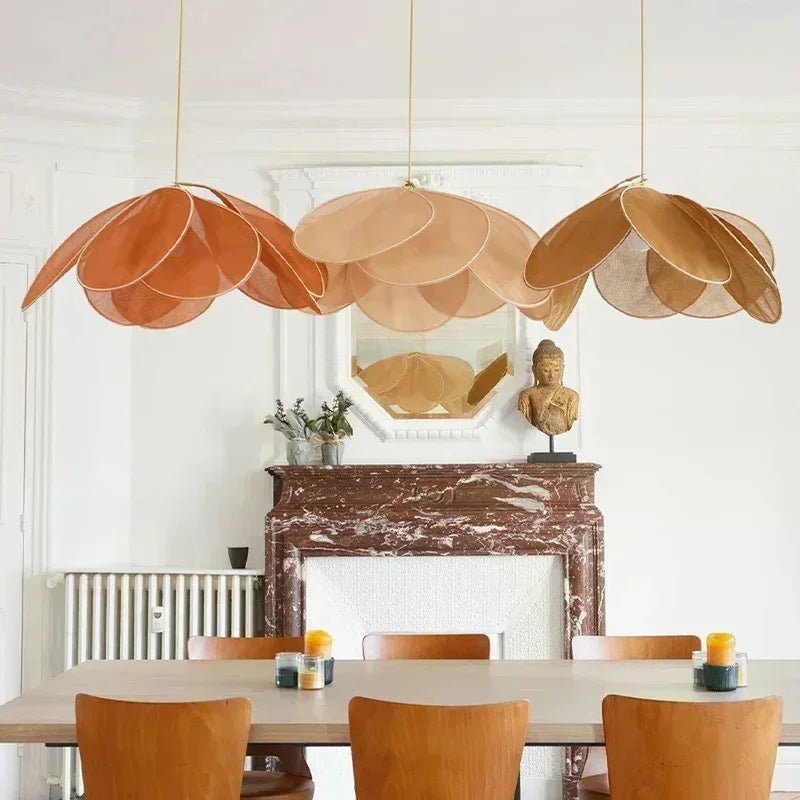 Suspensie din petale textile – Uzaelvin994,99 lei
1.657,99 lei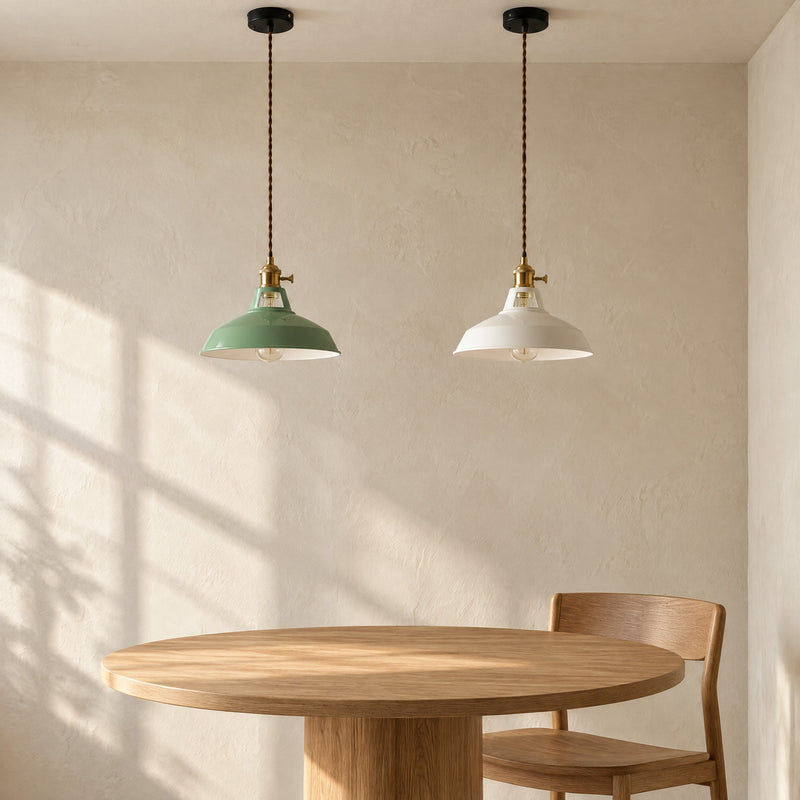 Pendul retro emailat cu întrerupător pe soclu din alamă, Ø 26 cm – Smaltine381,99 lei
635,99 lei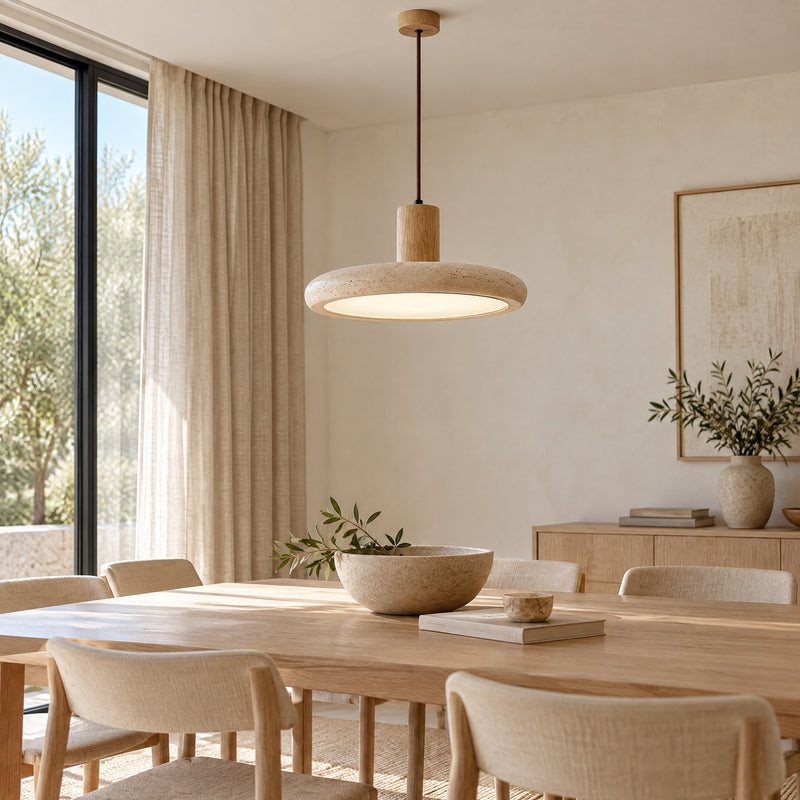 Pendulă tip disc din travertin cu accent din lemn, Ø30 sau Ø40 cm – Iaeston2.424,99 lei
4.040,99 lei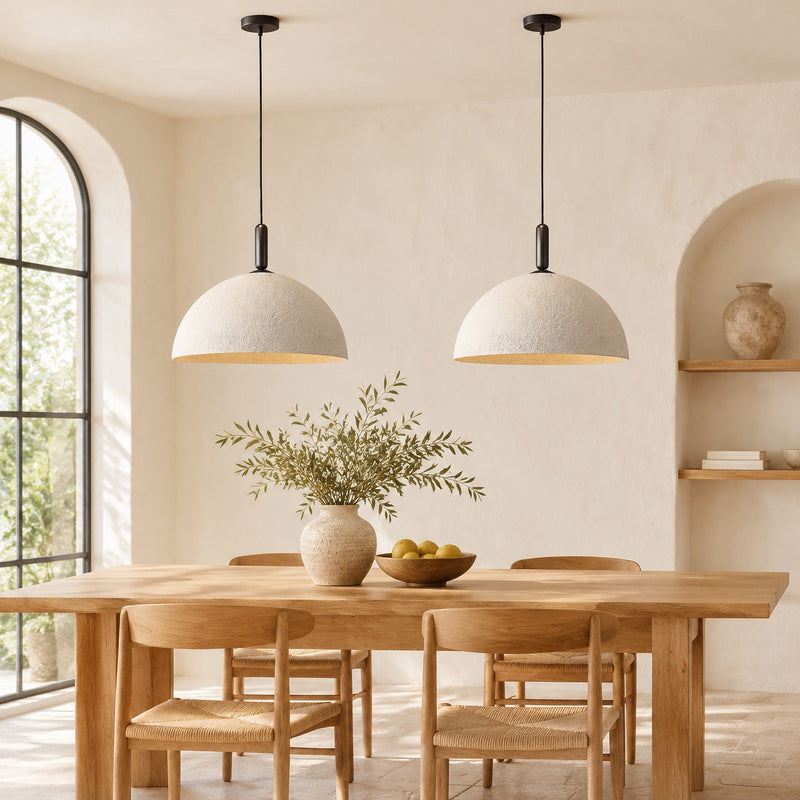 Suspensie tip cupolă cu finisaj texturat cu aspect de piatră, Ø30 până la Ø60 cm – Warven1.591,99 lei
2.652,99 lei
Continuă lectura
-
Stiluri de design
Idei de iluminat boho care aduc căldură și textură în orice cameră
Află mai multe → -
Stiluri de design
Iluminat Art Deco: Aduceți farmecul stilului Gatsby în propria locuință
Află mai multe → -
Stiluri de design
Design de iluminat scandinav: Principii, corpuri de iluminat și spații pline de armonie
Află mai multe →